

Mazda is making a dramatic pivot in its electrification strategy, cutting its planned EV investment by a staggering $3.3 billion while introducing an all-new SkyActiv-Z hybrid engine for the next-generation CX-5. The Japanese automaker is doubling down on its “Multi-Solution” approach, ensuring that hybrid, internal combustion (ICE), and battery electric vehicles (BEVs) coexist to meet varying global demands.
A Strategic Shift Amid Industry Disruption
In what Mazda calls the “dawn of electrification,” the company has reassessed its trajectory, trimming its EV investment from ¥2 trillion ($13.3 billion) to ¥1.5 trillion ($10 billion). This substantial reduction is made possible through key strategic alliances with industry heavyweights such as Toyota, Denso, BluE Nexus, and China’s Changan. These collaborations enable cost-sharing and technology exchange, allowing Mazda to remain competitive without overextending its resources.
Additionally, Mazda’s newly introduced “Lean Asset Strategy” focuses on improving flexibility in electrification while enhancing production efficiency. A pivotal part of this approach is manufacturing EVs and ICE vehicles on the same production lines. This shift drastically reduces the need for dedicated EV factories, slashing investment requirements by an impressive 85%. By leveraging AI-powered automatic guided vehicles (AGVs) and Factory Over-The-Air updates, Mazda is streamlining its supply chain for maximum efficiency.
The Next-Gen CX-5 Ushers in SkyActiv-Z Hybrid Tech
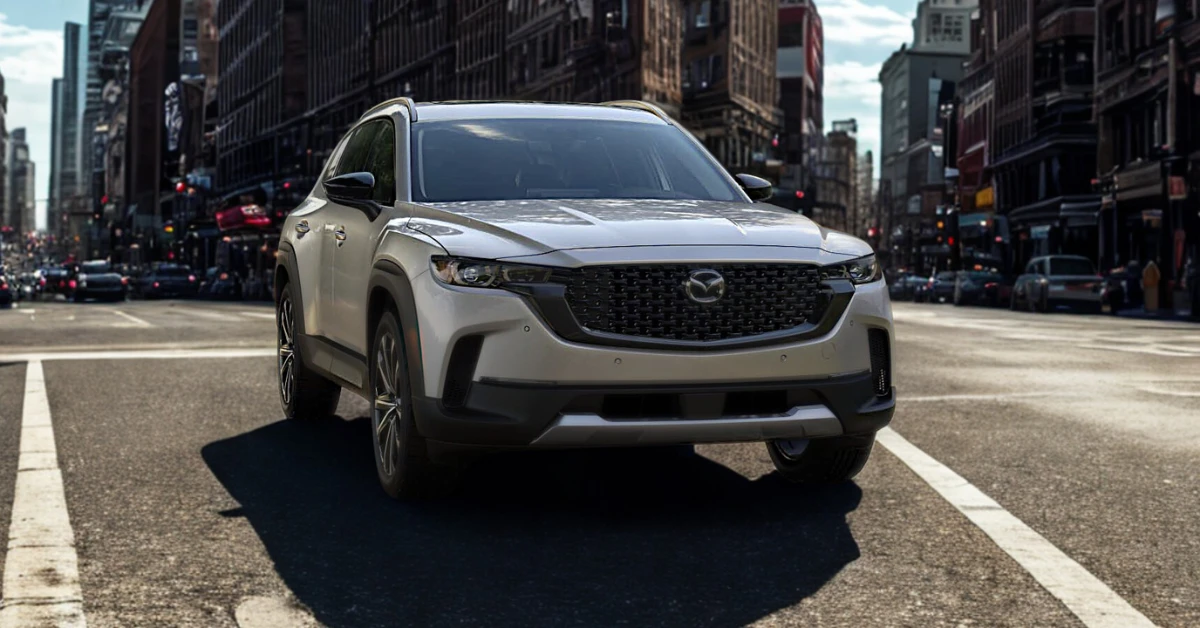
Mazda’s electrification journey is not just about full-electric vehicles—hybrids are playing a crucial role in the transition. Enter the SkyActiv-Z engine, a next-generation internal combustion powerhouse designed to be ultra-efficient while complying with strict emission regulations like Euro 7, LEV4, and Tier 4 standards. The first vehicle to feature this cutting-edge powertrain will be the next-gen CX-5, arriving by the end of 2027 with an in-house developed hybrid system.
Mazda touts the SkyActiv-Z as “close to the ultimate combustion” engine, offering outstanding fuel efficiency and performance without sacrificing driving pleasure. Beyond the four-cylinder variant destined for the CX-5, Mazda plans to extend this technology to larger inline-six engines and even a rotary application, reducing emissions across its lineup while maintaining the brand’s reputation for engaging driving dynamics.
Mazda’s EV Roadmap: A Homegrown Model on the Horizon
Despite the shift in investment strategy, Mazda is still actively developing electric vehicles. Alongside the Mazda6e sedan and an upcoming electric SUV (possibly named CX-6e), a new in-house EV is in the works, set to debut in 2027. Unlike its previous EV collaborations, this model will be built on Mazda’s own flexible platform, capable of accommodating multiple battery types and vehicle configurations.
Batteries for this model will be supplied by Panasonic Energy Corporation, ensuring a balance of reliability and efficiency. The vehicle will be produced in Japan and is expected to hit key markets, including Japan, Europe, and North America.
Consolidating Powertrains for a More Sustainable Future
Mazda’s commitment to refining internal combustion technology alongside electrification highlights its belief in a diversified approach. By consolidating its engine offerings, the company aims to reduce the total number of different powertrain units by more than half, increasing production efficiency and reducing costs.
Mazda CEO Masahiro Moro emphasized this philosophy, stating, “As the automotive industry undergoes a once-in-a-century transformation, Mazda remains committed to evolving the ‘joy of driving’ for the next generation. We aim to strike a balance between business efficiency and sustainable technology to deliver unique value, regardless of our scale.”
With its recalibrated strategy, Mazda is taking a measured yet ambitious approach to the future—leveraging partnerships, optimizing resources, and ensuring it remains a brand known for driving pleasure and efficiency in an evolving automotive landscape.